

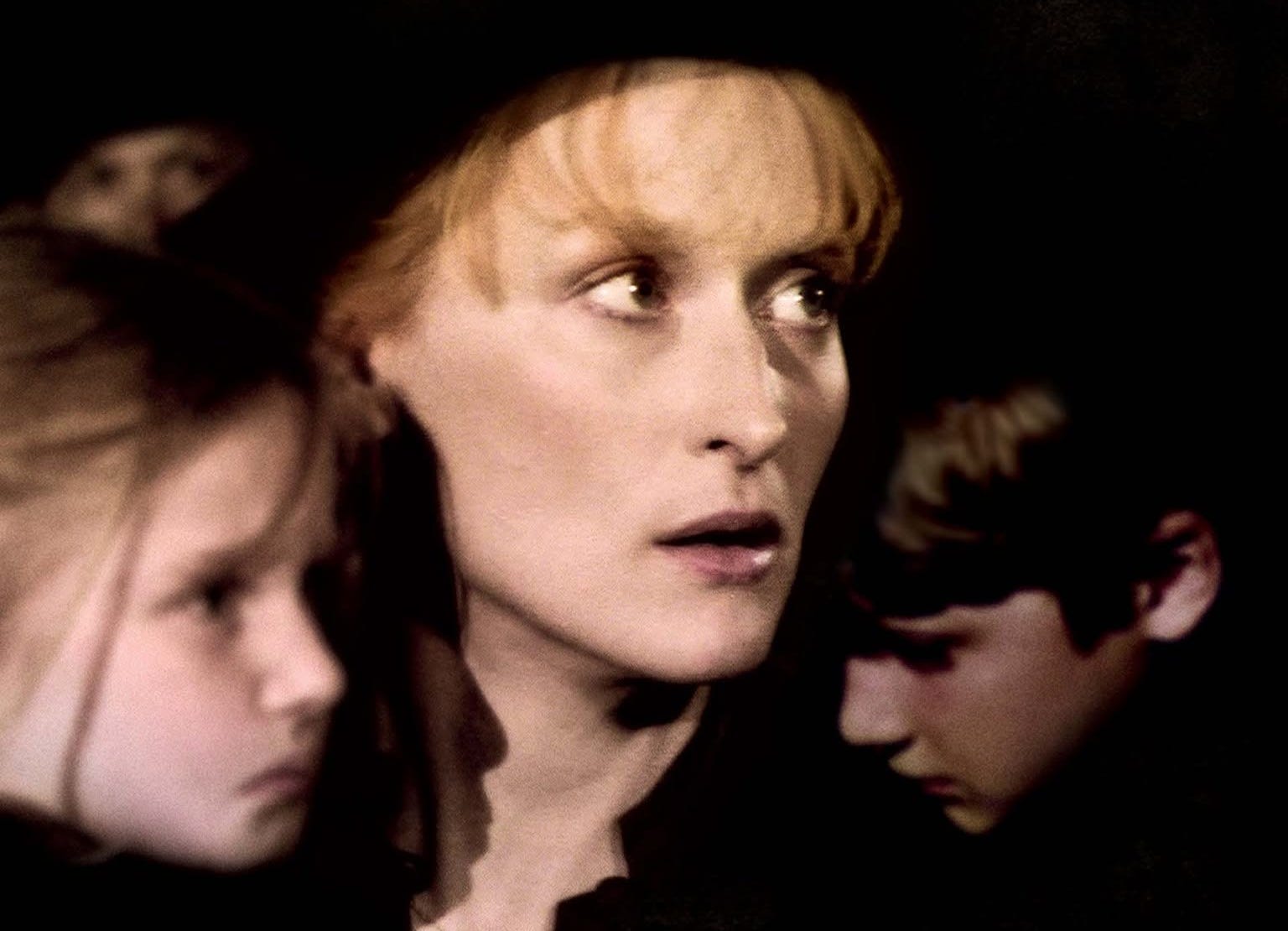
I killed your son.
There’s a Star Trek episode I remember from my childhood. A section of the ship is about to explode, and the crew has seconds to evacuate. The captain – who knows these people, has fought beside them, maybe even called them friends – has to make the call: let the explosion consume the whole ship, or seal the bulkhead and trap her own crew inside. She chooses the latter.
Seventy thousand light years from home, there’s no way to tell their families the truth: “I killed your son.”
It was an archetype I found inspiring. Someone who knew the weight of her responsibility and yet could carry it. Too many people can live their lives only by looking away. She didn’t.
The mark of a civilized human is the ability to look at a column of numbers, and weep.
I started my first charity in 2010 – together with my wonderful friend Lisa Wiese, who is probably no longer with us – and within about a year, I had a stream of some €50,000 per year that I needed to allocate to charities. I read everything I could find about the comparative cost-effectiveness of various interventions that we could support: everything from building walls to protect orphanages from shamans who kidnap orphans for child sacrifices, to providing clean cookstoves, malaria nets and anal fistula surgery, to funding emergency medical care in remote villages, to undercover investigations of factory farms.
Eventually, I made a decision, like the Star Trek captain. But that’s where the parallels end.
For the first four years of my grantmaking, I could barely fall asleep. I flagellated myself with nightmarish, graphic, and intensely emotional fantasies of all the suffering I had inflicted by refusing someone a grant.
The screams of the children abducted and sacrificed because I wouldn’t fund the wall for the orphanage. The misery of the mothers who lost their children to malaria because I wouldn’t fund the bed nets. The torment of the children themselves battling the terrible disease for weeks, worse than any I’ve endured and so much longer. The constant abject horror and excruciating pain of the pigs I didn’t help because helping chickens was more cost-effective. I wanted to kill myself many times, but what good would that have done. I’m not a solipsist.
It felt virtuous to feel the suffering of those that I sacrificed. Or the vague approximation of it that empathy allows. Not only was I not looking away, I was merging with the pain. No separate identity. I am no more those that I save than those that I kill.
Blaming myself for the horrors I'd inflicted shielded me from the abject helplessness I felt in the face of Suffering
Jeff Kaufman’s post on the Dead Child Currency told me that I had found my people: the effective altruism community. Bertrand Russell also put it well: “The mark of a civilized human is the ability to look at a column of numbers, and weep.” Thankfully, at least I got to feel civilized while every number felt to me like a good friend dying in front of my eyes over and over.
People can stand what is true, for they are already enduring it.
In May 2015, I gave myself permission to stop torturing myself empathically. I made a case that it doesn’t benefit anyone if I make myself suffer. I thought people would tear into me and reject me for my cold-heartedness. But the response was strange and lukewarm instead.
In October 2015, some weird mental blinders popped up over night. A kind of dissociation that allowed me to strip numbers of their meaning (if only I pretend hard enough) like when you say a word a hundred times. But I had to walk gingerly among my thoughts lest I recall their meaning.
And yet I remembered what I had seen in my mind. It’s no use running from the responsibility. Inaction is just another action. Just another way to kill and torture by omission.
First selecting the charity, then committing the money to something frivolous, and then donating it to the charity after all so the counterfactual is something frivolous? That’s just reference class tennis. It’s not just I’m responsible for killing or torturing everyone I don’t donate to, I’m just responsible for killing or torturing any of them. And for forgoing the frivolous thing.
Maybe I should feel responsible only for the fraction of my impact that’s indicated by some hypothetical Shapely value calculation? Okay, but I actively try to maximize my impact, my Shapley value. I’m responsible to the extent that I’m successful.
All lives saved, all suffering averted, comes at the cost of hopefully lesser sacrifices. A jellyfish has little impact potential and is hence blessed with little responsibility. A human being has enormous impact potential. Impact is a double-edged sword, and a heavy one at that.
So really the only way forward is to accept this terrible sword of responsibility, carry it with grace, and honor that in our godless world the power to give life or take life is either with us or with chance.
Gendlin was right: “People can stand what is true, for they are already enduring it.” It’s been more than ten years, and I am still alive. My sword will not crush me.
Maybe a Star Trek captain would carry it with greater ease, but I’ve proven that I will not collapse under its weight either.